Optimizing productivity for green and sustainable manufacturing
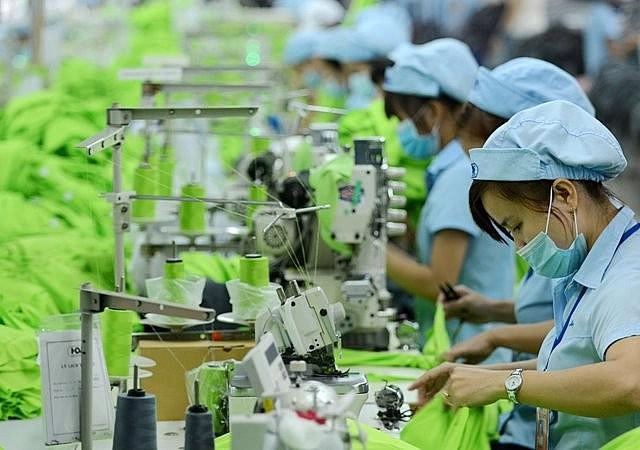
Amid rising input material costs and increasingly stringent sustainability requirements, Vietnamese enterprises are facing a new challenge: optimizing productivity while greening production. Rather than viewing productivity and environmental performance as separate objectives, integrating these two factors is becoming a critical management solution that helps businesses enhance competitiveness and achieve sustainable development.
- Productivity and green production: Two sides of the same coin
For many years, businesses have focused on increasing output, reducing labor costs, or improving operational efficiency, while environmental issues have often been managed separately. However, experience has shown that when production processes are optimized and waste is minimized, the consumption of energy, water, and raw materials can also be significantly reduced.
This is where productivity and green production intersect: businesses can simultaneously lower costs and reduce their environmental footprint.
- Resource savings through operational efficiency
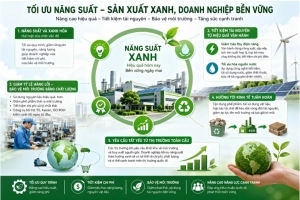
A standardized operating process can generate substantial benefits for both economic performance and environmental protection.
Reducing energy consumption: When machinery operates at the appropriate capacity and production schedules are organized efficiently, idle running and inefficient operations can be minimized. This enables businesses to significantly reduce electricity costs, which often account for a large share of overall production expenses.
Optimizing water use: In industries such as textile dyeing, food processing, and agricultural product processing, the adoption of water-saving technologies, water reuse systems, and leakage control measures not only lowers operating costs but also demonstrates corporate responsibility toward natural resources.
- Reducing defect rates – protecting the environment through quality
Effective quality control is one of the most practical ways to reduce environmental pressure. When product defects and material losses are minimized, businesses can use raw materials more efficiently, reduce waste generation, and lower waste treatment costs.
Continuous improvement tools such as 5S, Kaizen, and ISO 9001 quality management systems help businesses prevent defects at the source, improve production efficiency, and establish a strong foundation for sustainable green development.
- Toward a circular economy
Rather than maintaining the traditional “take-make-dispose” model, many businesses are transitioning toward a circular economy. By utilizing by-products as inputs for other processes, reusing materials, or collaborating with recycling partners, companies can extend resource lifecycles, reduce environmental pressures, and create additional value streams.
This is not only an environmental solution but also a long-term strategy that helps businesses reduce dependence on virgin raw materials and improve resilience against market fluctuations.
- An essential requirement of the global marketplace
Green productivity is no longer an optional initiative – it is rapidly becoming a business necessity. Major export markets are imposing increasingly stringent requirements related to environmental performance, carbon emissions, resource efficiency, and product traceability.
Businesses that integrate productivity goals and sustainability objectives into their operational strategies at an early stage will gain significant advantages in terms of cost efficiency, product quality, and competitive positioning in international markets.
It is clear that productivity optimization not only enables businesses to operate more efficiently but also serves as a key driver of green production and sustainable development. As every process is improved, every resource is utilized more effectively, and every form of waste is reduced, businesses move closer to achieving sustainable growth in the green economy era.
VNCPC