Promoting Industrial Symbiosis at VSIP Bac Ninh Industrial Park: From Resource Identification to Collaboration Opportunities
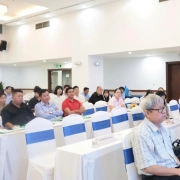
On the morning of 19 August 2026, the Workshop “Industrial Symbiosis in VSIP Bac Ninh Industrial Park” was held at VSIP Bac Ninh Industrial Park to support enterprises in identifying, discussing, and gradually developing feasible industrial symbiosis opportunities.
The Workshop was organized within the framework of the Project “Scaling up the Eco-Industrial Park Approach to Promote Circular Economy in Viet Nam”, funded by the State Secretariat for Economic Affairs (SECO) and implemented by the United Nations Industrial Development Organization (UNIDO) and the Ministry of Finance (MOF).
The event brought together representatives from the Project Management Unit, the Bac Ninh Industrial Zones Authority, VSIP Bac Ninh Co., Ltd., enterprises operating in VSIP Industrial Park, UNIDO experts, Vietnam Cleaner Production Centre Co.Ltd. (VNCPC), and other relevant organizations.
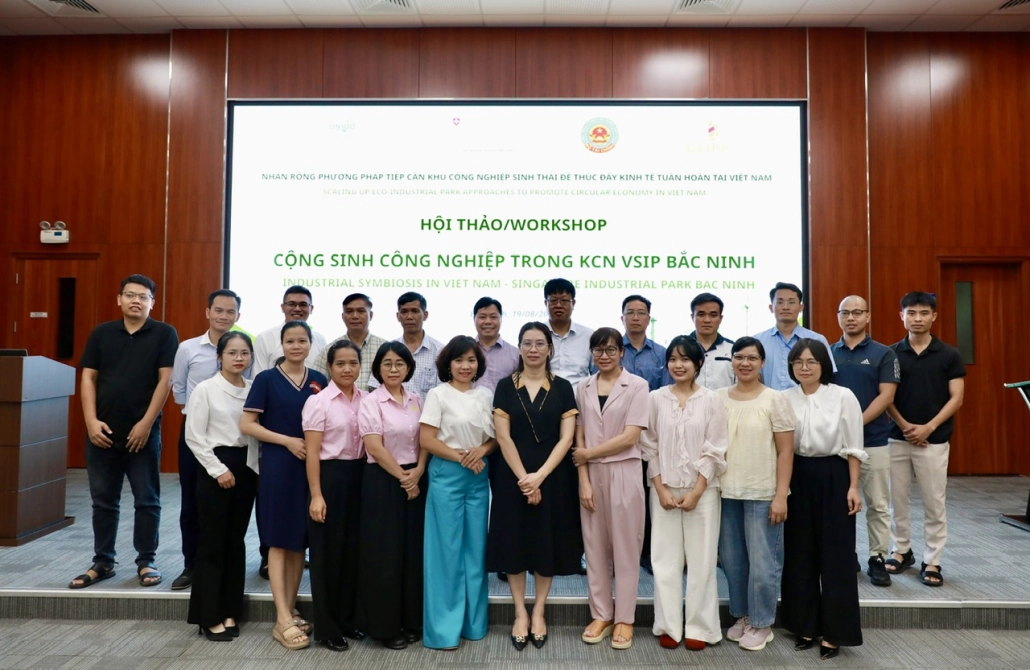
Delegates at the Workshop pose for a group photo
Industrial symbiosis goes beyond waste exchange
At the Workshop, experts shared key concepts, methodologies, and tools to support enterprises in identifying industrial symbiosis opportunities, while also presenting practical models and experiences from Viet Nam and around the world.
One of the key messages highlighted was that industrial symbiosis should be viewed more broadly than simply using the waste or by-products of one enterprise as raw materials for another.
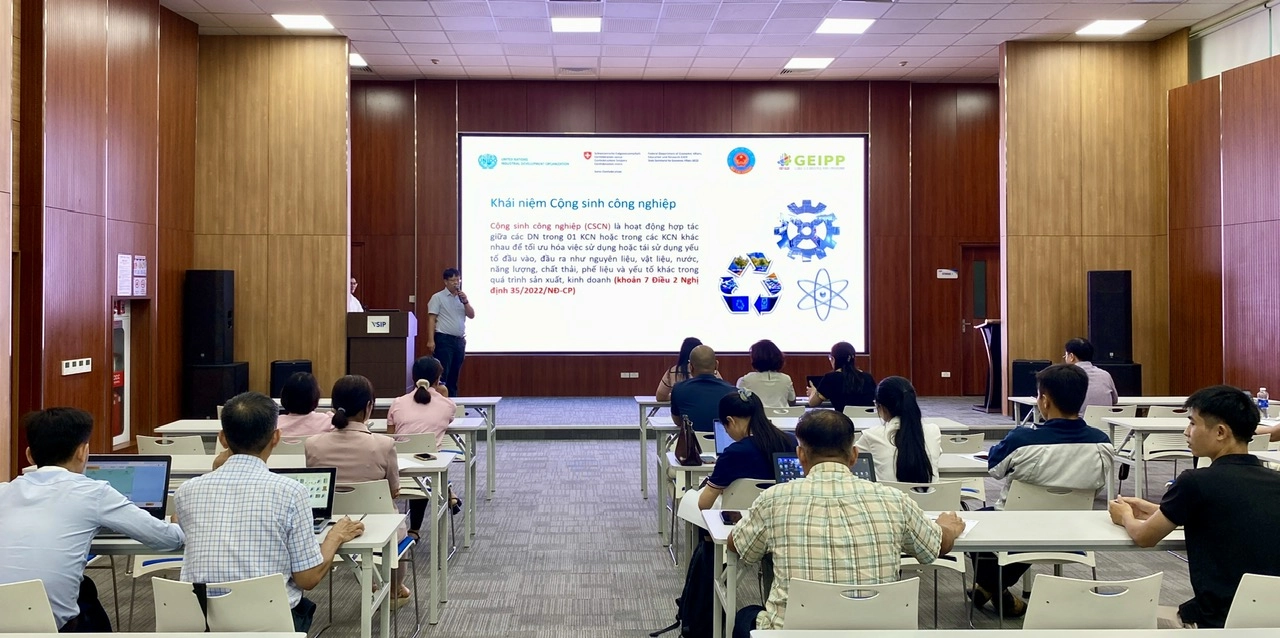
Mr. Ta Van Trung – National Eco-Industrial Park Expert, UNIDO
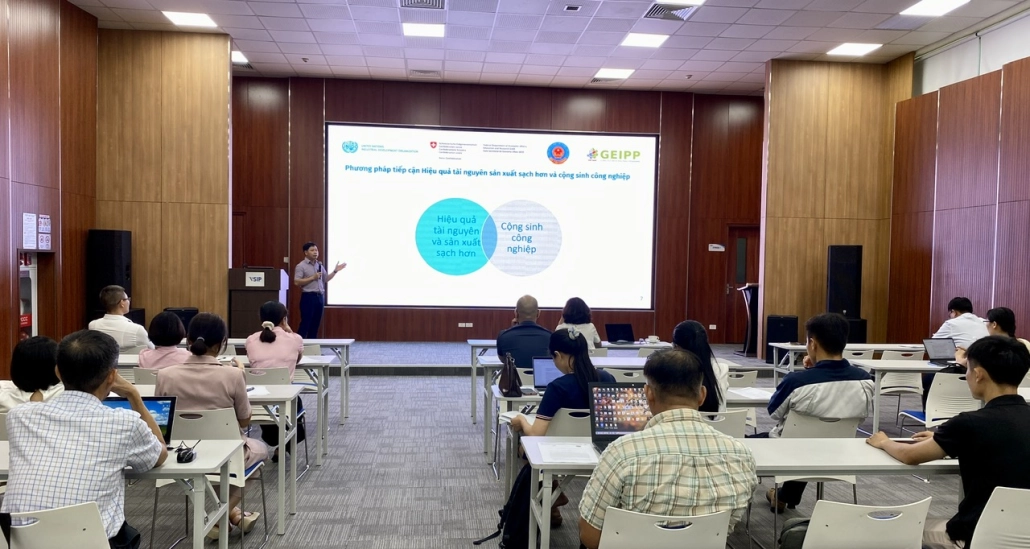
Dr. Le Xuan Thinh – Director of VNCPC
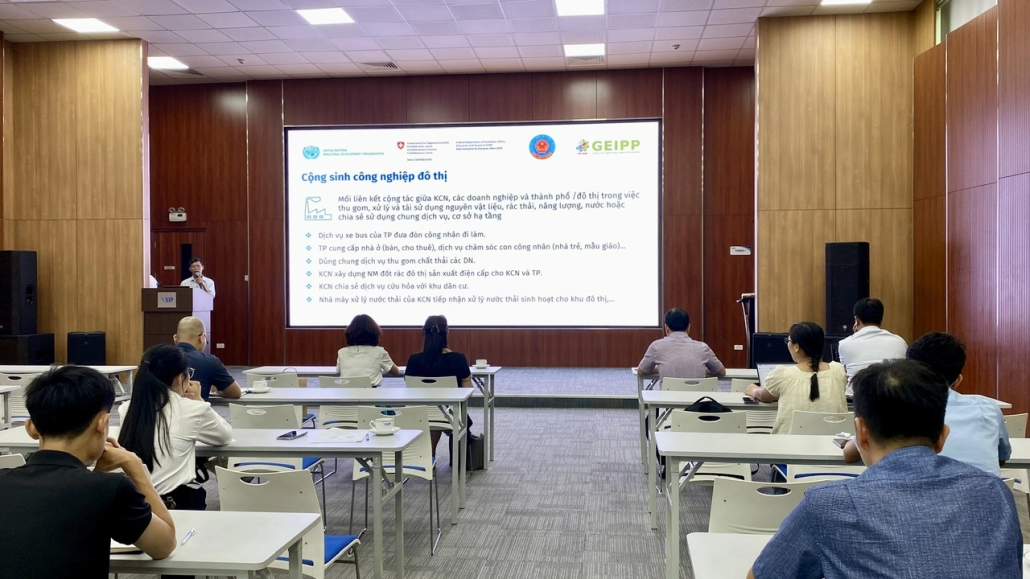
Mr. Dinh Manh Thang – Senior Expert of VNCPC
Industrial symbiosis opportunities may also arise from water, steam, waste heat, energy, compressed air, infrastructure, logistics, laboratories, maintenance, training, emergency response, or other shared services.
In his presentation, Mr. Ankit Kapasi – Eco-Industrial Park Expert from dss+ – emphasized that success does not lie in identifying hundreds of potential symbiosis ideas, but rather in identifying a smaller number of practical and specific opportunities that enterprises are willing and able to investigate and implement further.
Instead of asking only, “What waste does the enterprise generate?”, enterprises can broaden their perspective by asking: What resources do we have in excess? What resources do we need? Which costs are currently high? Which processes are creating operational challenges?
This approach enables enterprises to identify a wider range of collaboration opportunities from their existing resource streams and capabilities.
From an idea to an implementable opportunity
According to the expert, a match between an enterprise with an available resource and another enterprise with a corresponding demand represents only a potential opportunity; it is not yet an industrial symbiosis project.
For example, if Enterprise A has a by-product that Enterprise B could potentially use, several questions still need to be addressed: Is the supply sufficient and stable? Does the quality meet the required specifications? How far apart are the two enterprises? Are additional storage, transportation, or treatment measures required? What environmental, safety, and regulatory requirements apply? Most importantly, can the opportunity generate sufficient economic benefits for the participating enterprises?
To support this process, enterprises can develop a simple “resource passport” for key resource streams, focusing on six pieces of information: What is it? How much is available? What is its quality? When is it available? What is its current cost? And what constraints exist?
At the initial stage, the data do not need to be fully detailed. The objective is to obtain sufficient information to identify and screen opportunities. Once an opportunity demonstrates clear potential, enterprises can proceed with measurements, sampling, and more detailed technical and financial assessments.
Business-to-business connection is a key factor
Data and matching tools can help accelerate the identification of opportunities, but they cannot replace direct communication between enterprises.
A waste heat stream, treated wastewater, unused infrastructure capacity, or an enterprise’s logistics demand may not be fully reflected in a database, but such opportunities can often be identified through discussions between technical staff and production managers.
Therefore, the identification of industrial symbiosis opportunities should combine multiple sources of information, including input-output flow analysis, on-site assessments, discussions with enterprises, matching tools, case studies, and information on industrial park infrastructure.
Once multiple ideas have been identified, enterprises need to further screen and prioritize them based on two key factors: potential benefits and achievability.
Opportunities offering high benefits, relatively clear supply-demand relationships, and favorable implementation conditions should be prioritized for pre-feasibility assessment.
From discussion to the next steps for action
In addition to the technical presentations, the Workshop provided an opportunity for enterprises to discuss industrial symbiosis opportunities already identified within VSIP Bac Ninh Industrial Park, consider their priority levels, and define possible next steps. Participants were also encouraged to propose additional opportunities based on the actual needs and available resources of their enterprises.
Through this process, each industrial symbiosis idea needs to progressively clarify who can supply the resource, who can use it, what information is still missing, what barriers need to be addressed, and who should take responsibility for the next step.
As emphasized during the Workshop, industrial symbiosis does not necessarily begin with a perfect database or sophisticated technology. What matters is understanding what enterprises have, what they need, and where a shared solution can create value for the participating parties.
From these initial connections, industrial symbiosis opportunities can gradually be developed into concrete projects, contributing to improved resource efficiency, reduced environmental impacts, and the transformation of VSIP Bac Ninh Industrial Park towards an eco-industrial park model.
VNCPC