
Transitioning to Eco-Industrial Parks: What Support Is Available After an RECP Assessment?
Resource Efficient and Cleaner Production (RECP) assessment is not only aimed at identifying improvement opportunities and providing technical recommendations. When enterprises choose to implement the solutions, the project and experts continue to accompany and support them throughout the implementation, monitoring and evaluation process.
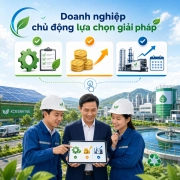
In previous articles in the “Transitioning to Eco-Industrial Parks” series, VNCPC shared the benefits that enterprises can receive from participating in RECP assessments, as well as their right to proactively select appropriate solutions.
A further question of interest to many enterprises is: After completing the assessment and receiving technical recommendations, will enterprises continue to receive support?
Question
What is the project’s commitment to accompanying and supporting enterprises during implementation as well as after the project ends?
Project expert’s response
The project continues to provide flexible support to enterprises during the implementation of RECP solutions. The support focuses on three main areas:
Technical support: Experts are available to answer questions and clarify issues related to the proposed solutions, helping enterprises clearly understand the technical basis, conditions for application and issues that need to be considered during implementation.
Support during implementation: When an enterprise chooses to implement a solution, experts can continue to provide guidance and technical advice, monitor the implementation process and support the evaluation of results. This provides the enterprise with a basis for determining the actual effectiveness and adjusting the solution when necessary.
RECP assessment does not only produce a technical report but also aims to bring about practical changes, helping enterprises use resources more efficiently and reduce costs.
Maintaining connections after the project: After the project ends, within the permitted scope, the project and experts will continue to maintain connections with and support enterprises when necessary, contributing to maintaining the effectiveness and sustainability of the implemented solutions.
Ensuring that solutions do not remain only on paper
From a technical recommendation to successful implementation in practice, several additional steps may be required.
For example, enterprises may need to recheck equipment specifications, adjust operating conditions, identify investment resources or select an appropriate time for implementation. After implementation, indicators such as electricity, fuel, water and raw material consumption, as well as the amount of waste generated, also need to be monitored to evaluate effectiveness.
The support of experts therefore helps enterprises move from “having a solution” to “knowing how to implement and measure the effectiveness of the solution”.
However, an important principle remains unchanged: the enterprise is the final decision-maker. Enterprises proactively select the solutions, timing and scale of implementation based on their technical and financial conditions and production and business plans.
This process can be illustrated as follows:
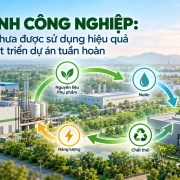
Assessment of the current situation → Identification of opportunities → Proposal of solutions → Enterprise selection → Implementation support → Effectiveness evaluation → Continuous improvement
RECP is a process of continuous improvement
Some RECP solutions can be implemented immediately at low cost or without requiring investment. Other solutions may need to be incorporated into medium- and long-term investment plans.
Therefore, improvement activities within an enterprise do not necessarily end when the assessment activity or the project ends.
Once a solution has been implemented and its effectiveness verified, the enterprise can continue to standardize operating practices, expand the scope of application or identify new opportunities. This is also the spirit of RECP: implementing step by step, measuring results and continuously improving.
Through this approach, the assessment does not only produce a technical report but aims to bring about practical changes, helping enterprises use resources more efficiently, reduce costs and emissions, and gradually move closer to the eco-enterprise and Eco-Industrial Park models.
Please continue to follow VNCPC’s “Transitioning to Eco-Industrial Parks” series to explore practical questions from enterprises during their participation in RECP assessments and transition towards more sustainable production models.
VNCPC